
As businesses grow, managing daily operations becomes increasingly complex. Tasks such as processing customer inquiries, generating invoices, tracking orders, managing employee information, and preparing reports can consume significant time when handled manually.
Many businesses initially rely on spreadsheets, emails, and multiple disconnected applications to manage these activities. While these tools may work for smaller operations, they can create delays, duplicate data, communication gaps, and errors as the business expands.
This is where custom software automation can make a difference.
Custom software allows businesses to automate repetitive processes based on their specific operational requirements. Instead of depending entirely on manual work or adjusting processes to fit generic software, companies can build solutions that match how their teams actually work.
In this article, we explore seven business workflows that can be automated with custom software, along with their benefits and practical applications.
Business workflow automation is the use of software to perform repetitive tasks, manage information, and move work between people or departments with minimal manual intervention.
For example, when a customer submits an inquiry through a website, an automated workflow can:
These steps can happen automatically based on predefined business rules.
Custom software makes it possible to design workflows around specific business processes, approval structures, integrations, and reporting requirements.
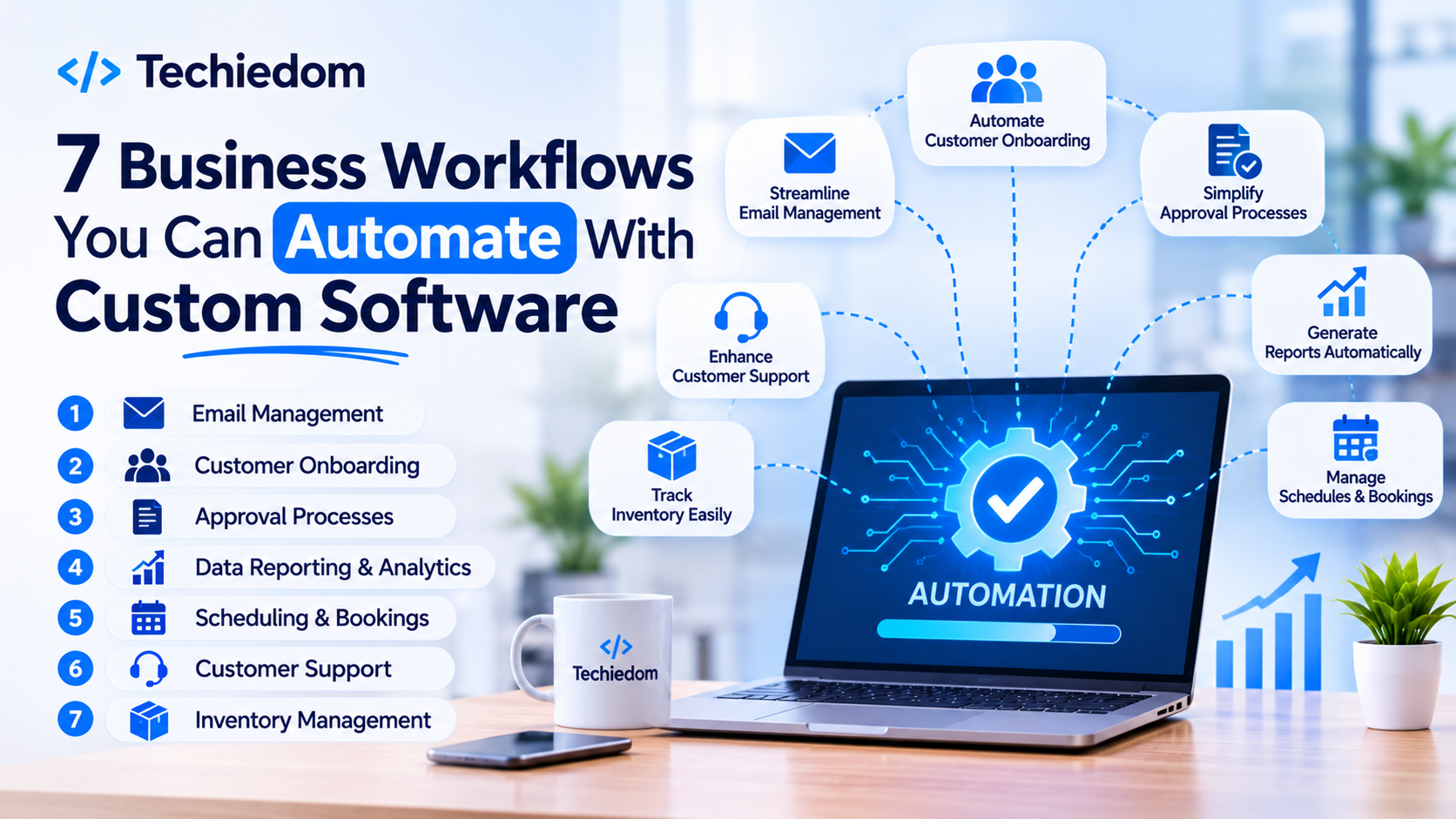
Here are seven common business workflows that can benefit from custom software automation.
Managing leads manually can become difficult when a business receives inquiries through multiple channels, including websites, social media, email, and phone calls.
Without a centralized process, sales teams may miss inquiries, delay follow-ups, or lose track of potential customers.
How custom software can automate it:
A custom lead management system can capture inquiries from different sources and organize them in one place.
It can automatically:
Example: A web development company receives inquiries for website design, mobile app development, and custom software. A custom CRM can automatically route each inquiry to the relevant sales team based on the selected service.
Business benefits:
Creating invoices, sending payment reminders, and updating financial records manually can take considerable time.
Businesses that process a high volume of transactions may also struggle to track overdue payments and maintain accurate records.
How custom software can automate it:
A custom billing and invoicing system can connect customer records, orders, and payment information.
It can automatically:
Payment gateway integration can also help businesses synchronize payment confirmations with their internal systems.
Business benefits:
Employee onboarding involves several administrative activities, including collecting documents, creating employee accounts, assigning training, and coordinating with different departments.
When these tasks are managed through separate emails and spreadsheets, important steps can be missed.
How custom software can automate it:
A custom HR management system can organize the onboarding process from the moment a candidate accepts an offer.
For example, it can:
Business benefits:
Businesses that sell physical products need to monitor inventory, process orders, and coordinate deliveries.
Manual inventory tracking can lead to incorrect stock information, delayed order processing, and difficulties identifying products that need replenishment.
How custom software can automate it:
A custom inventory management system can connect stock records with sales, purchasing, and order processing.
It can automatically:
For ecommerce businesses, the system can also integrate with an online store to synchronize product availability and order information.
Business benefits:
Customer support teams often receive requests through emails, contact forms, phone calls, and messaging platforms.
Without a structured system, requests can be overlooked, assigned incorrectly, or left unresolved for too long.
How custom software can automate it:
A custom customer support platform can organize incoming requests and manage them through a defined resolution process.
It can automatically:
Businesses can also add knowledge bases, chatbots, and AI-powered support features where they provide genuine value.
Business benefits:
Many organizations depend on approvals for activities such as purchase requests, expense claims, leave applications, contracts, and project budgets.
When approvals happen through long email conversations, employees may struggle to identify the latest document or determine who needs to approve it next.
How custom software can automate it:
A custom workflow management system can route requests through predefined approval stages.
For example, a purchase request may follow this process:
The system can also:
Business benefits:
Business owners and managers need accurate information to make decisions. However, collecting data from multiple spreadsheets, departments, and applications can make reporting time-consuming.
Manual reports may also contain outdated information or inconsistent figures.
How custom software can automate it:
A custom reporting dashboard can collect data from connected business systems and present relevant metrics in one place.
It can automatically:
For example, a sales dashboard can display new leads, qualified opportunities, closed deals, revenue, and conversion rates without requiring employees to prepare separate spreadsheets.
Business benefits:
Businesses often begin with manual processes because they are easy to set up and require little initial investment. However, as operations grow, these processes may become difficult to maintain.
| Business Activity | Manual Process | Custom Software Automation |
|---|---|---|
| Lead management | Updating spreadsheets and assigning leads manually | Automatic lead capture and assignment |
| Invoicing | Preparing invoices individually | Automated invoice generation |
| HR onboarding | Coordinating tasks through emails | Centralized onboarding workflows |
| Inventory | Updating stock records manually | Automatic stock updates and alerts |
| Customer support | Tracking requests through email | Centralized ticket management |
| Approvals | Sending requests through email | Rule-based approval routing |
| Reporting | Combining data from different files | Automated dashboards and reports |
The right solution depends on the volume of work, process complexity, existing tools, and business goals.
Not every process needs custom software. For simple requirements, ready-made applications or basic automation tools may be sufficient.
However, custom workflow automation becomes worth evaluating when:
Before investing, identify the processes that consume the most time and estimate the operational value of automating them.
A successful automation solution may require more than a single software application. Businesses often need connected systems that support different departments and operational activities.
Depending on business requirements, custom development may include:
A custom CRM can centralize customer information, manage sales pipelines, automate follow-ups, and provide visibility into customer interactions.
Custom ERP solutions can connect departments such as finance, inventory, procurement, operations, and human resources through a unified system.
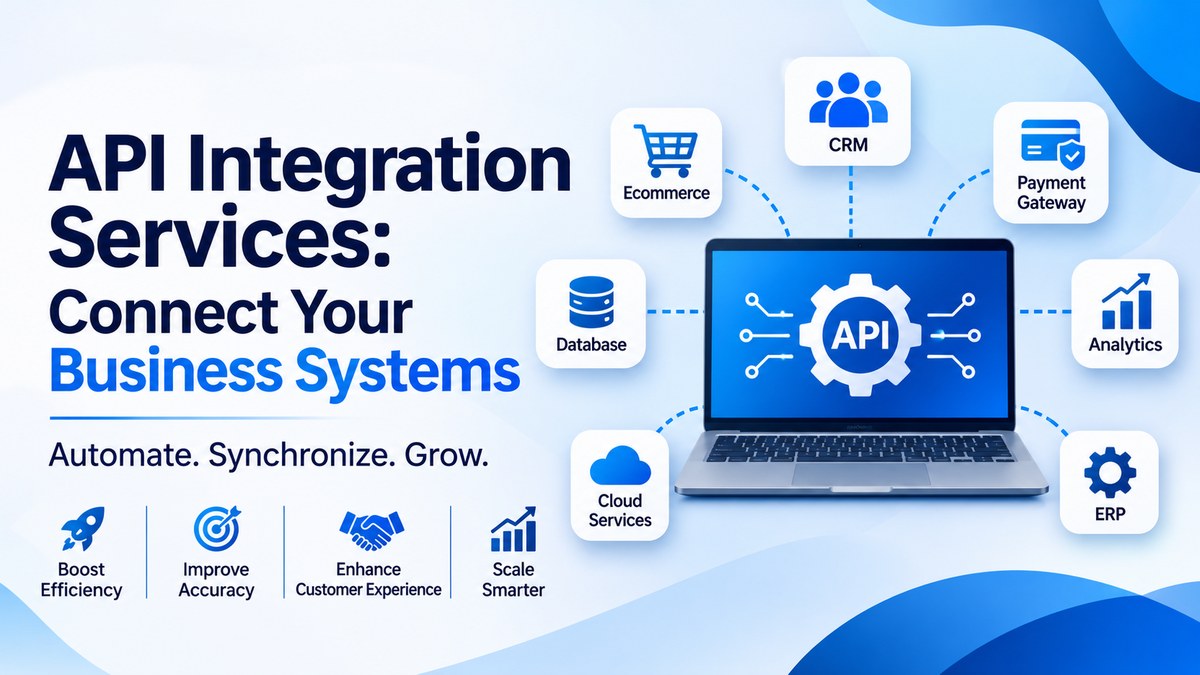
API development helps different applications exchange information. For example, a business can connect its CRM with an ecommerce platform, payment gateway, accounting application, or internal dashboard.
Custom dashboards present operational data in a structured format, helping managers monitor performance and identify areas that need attention.
AI features can support tasks such as document classification, information extraction, customer inquiry categorization, and intelligent search. These features should be introduced where they improve accuracy, speed, or decision-making.
A structured implementation approach can help businesses avoid unnecessary development costs and focus on processes that provide measurable value.
Follow these steps:
Starting with one important workflow can make implementation easier and help businesses evaluate the results before expanding automation across other departments.
Manual business processes can become difficult to manage as a company grows. Repetitive tasks involving lead management, invoicing, HR, inventory, customer support, approvals, and reporting can consume valuable time and limit operational efficiency.
Custom software provides businesses with an opportunity to automate these workflows according to their specific requirements. By connecting departments, reducing repetitive work, and improving access to information, companies can build more organized and scalable operations.
The key is to automate the right processes rather than introducing technology without a clear business purpose.
Looking to streamline your business operations? TechieDom provides custom software development, CRM development, API integration, web application development, and other technology services to help businesses build solutions around their operational needs. Explore how custom software can simplify your workflows and support long-term growth.