
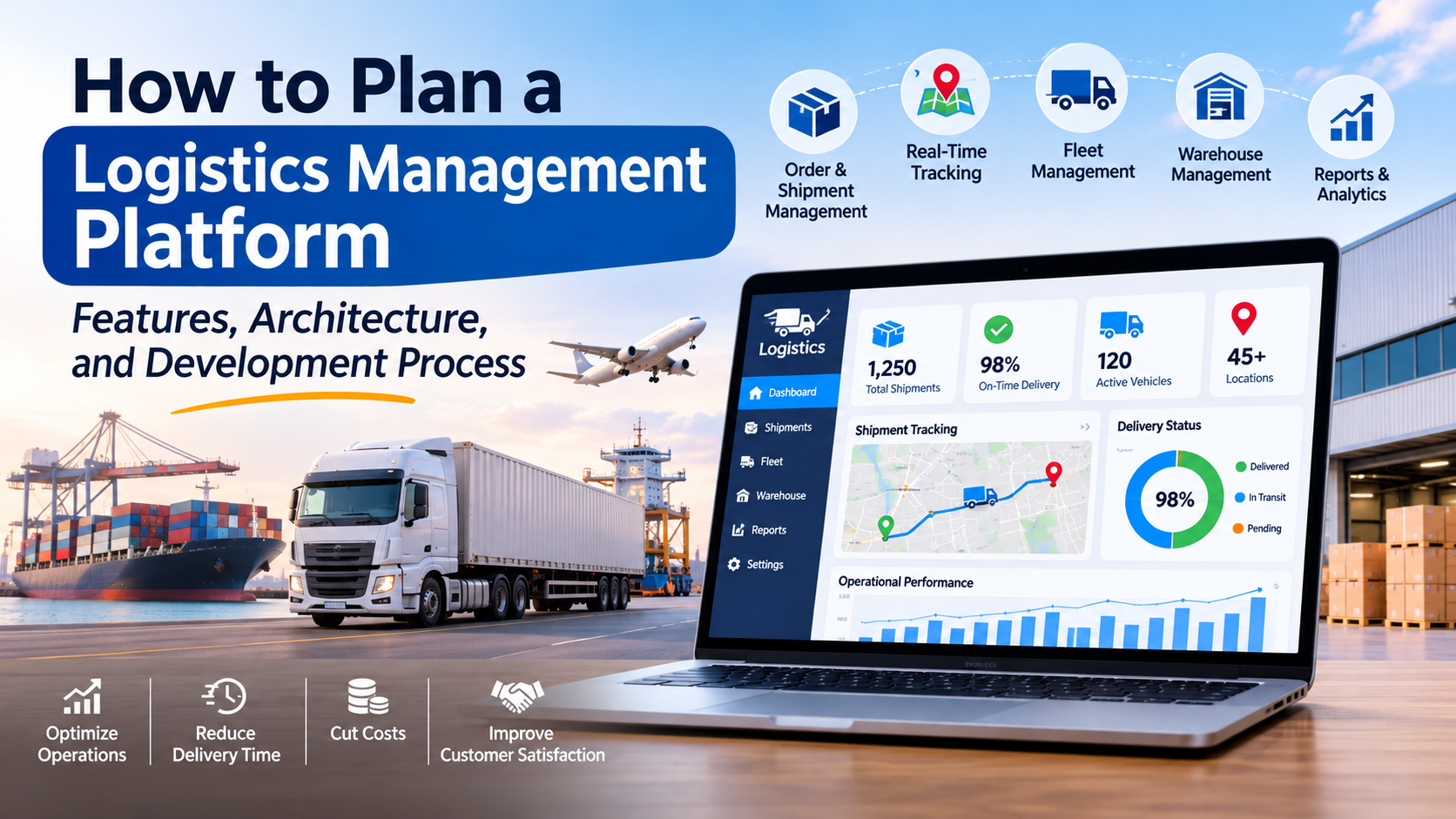
The logistics industry plays a critical role in modern business operations. From managing transportation and warehouse activities to coordinating deliveries and tracking shipments, logistics companies handle multiple processes that require accuracy, visibility, and efficient coordination.
However, many businesses still depend on spreadsheets, manual documentation, phone calls, and disconnected software systems to manage their logistics operations. These methods can create communication gaps, delayed deliveries, operational inefficiencies, and limited visibility into supply chain activities.
A logistics management platform can help businesses bring these operations together in one centralized system. It allows companies to manage orders, coordinate transportation, monitor shipments, optimize routes, and track overall performance.
But building an effective platform requires careful planning. Businesses need to understand their operational requirements, identify essential features, choose suitable technologies, and design a system that can scale as operations grow.
In this guide, we will explore how to plan a logistics management platform, the essential features to consider, the development process, and important technical decisions that can influence its long-term success.
Before starting development, identify the specific logistics challenges your platform needs to solve.
Not every logistics business operates in the same way. A freight forwarding company may need shipment coordination and customs documentation, while a transportation company may prioritize fleet management and route optimization.
Start by identifying your business model and operational requirements.
Consider the following questions:
Clearly defining these requirements helps establish the platform’s scope and prevents unnecessary development expenses.
A logistics management platform usually serves multiple users who interact with different parts of the system.
Understanding these roles is essential when planning user permissions, dashboards, and workflows.
Common user roles include:
Administrator: Manages the platform, user accounts, system settings, permissions, and overall operations.
Logistics Manager: Oversees shipments, transportation schedules, delivery performance, and operational activities.
Warehouse Staff: Handles inventory updates, order processing, packing, dispatching, and receiving operations.
Drivers: Access delivery assignments, navigation details, shipment information, and delivery confirmation options.
Customers: Place orders, track shipments, view delivery updates, and access invoices.
Third-Party Carriers: Receive transportation assignments, update shipment statuses, and communicate delivery information.
Each user should have access to the information and functionality relevant to their responsibilities.
Role-based access control can help protect sensitive business information and simplify daily operations.
Features determine how effectively a logistics platform supports business operations. Instead of adding every possible functionality during the initial development stage, prioritize features based on business requirements.
Here are some important features to consider.
Order and shipment management should be one of the central components of a logistics platform.
It allows businesses to create, organize, assign, and monitor shipments from a centralized dashboard.
Important capabilities include:
A centralized order management system helps reduce manual coordination and improves visibility across logistics operations.
Customers and logistics managers need accurate information about shipment locations and delivery progress.
A shipment tracking module can use GPS devices, driver mobile applications, carrier integrations, and tracking APIs to provide location and status updates.
Useful features include:
Real-time tracking improves transparency and helps businesses respond more quickly to unexpected delays.
The platform should also consider location update frequency, GPS accuracy, and connectivity limitations.
For transportation companies, fleet management is an important part of logistics operations.
The system should provide visibility into vehicle availability, assignments, maintenance schedules, and operating performance.
Consider including:
These capabilities help businesses manage transportation resources more effectively and reduce avoidable operational expenses.
Poor route planning can increase fuel consumption, transportation costs, and delivery times.
A route planning module can help logistics teams identify efficient delivery routes based on available road networks and operational requirements.
Important considerations include:
Advanced systems can integrate mapping services and route optimization algorithms to improve delivery planning.
However, businesses should distinguish between basic route mapping and advanced optimization. The latter requires additional operational data and more complex development.
If your logistics operations involve storage facilities, warehouse management should be considered during platform planning.
A warehouse management module can help track inventory movement and coordinate activities between storage locations and transportation teams.
Useful features include:
Integrating warehouse and transportation operations can reduce information gaps between inventory teams and delivery operations.
Communication is important throughout the logistics process.
A notification system can automatically inform relevant users about shipment updates, delivery schedules, and operational changes.
Examples include:
Businesses can use email, SMS, push notifications, or messaging integrations depending on their communication requirements.
Financial management is another important component of logistics operations.
The platform should support accurate calculation and tracking of transportation and service charges.
Consider including:
The billing module should support the pricing rules and financial workflows relevant to the business.
A reporting dashboard helps logistics managers understand operational performance and identify areas for improvement.
Useful performance indicators include:
A well-designed analytics dashboard can turn operational data into useful business insights.
Technology selection directly influences platform performance, scalability, security, and maintenance requirements.
The right technology stack depends on the expected number of users, data volume, integrations, and business functionality.
A possible technology stack includes:
| Technology Layer | Suitable Technologies |
|---|---|
| Frontend Development | React.js, Next.js |
| Backend Development | Node.js, Laravel |
| Database | PostgreSQL, MySQL |
| Mobile Application | React Native, Flutter |
| Cloud Infrastructure | AWS, Microsoft Azure |
| Maps and Location | Google Maps Platform, Mapbox |
| API Integration | REST APIs, GraphQL |
| Real-Time Updates | WebSockets, MQTT where appropriate |
| Authentication | OAuth 2.0, JWT-based authentication |
You do not need to use every technology listed above. The development team should recommend an architecture based on your actual requirements.
For example, a platform with real-time vehicle tracking may require different infrastructure considerations from a basic shipment management application.
A logistics management platform can contain multiple dashboards, operational workflows, and large amounts of information.
If the interface is difficult to navigate, users may struggle to complete routine tasks efficiently.
Focus on designing interfaces that simplify everyday operations.
Important UI/UX considerations include:
Role-Based Dashboards: Provide relevant information to administrators, drivers, warehouse employees, and customers.
Simple Navigation: Organize shipments, orders, fleet information, and reports into clearly defined sections.
Mobile-Friendly Interfaces: Ensure drivers and field employees can use the platform conveniently on smartphones.
Visual Status Indicators: Use clear labels and indicators to communicate shipment progress.
Easy Data Entry: Reduce unnecessary fields and simplify forms used for creating orders and shipments.
Accessible Design: Consider readable typography, appropriate contrast, and accessible interactive elements.
Creating wireframes and interactive prototypes before development can help identify usability issues early.
Most logistics platforms need to communicate with external services and existing business applications.
Integrations help automate information exchange and reduce the need for manual data entry.
Depending on your requirements, consider integrating:
Before selecting an integration, review API availability, pricing, rate limits, authentication requirements, and data compatibility.
It is also important to plan how the platform will handle API failures, delayed updates, and temporary service interruptions.
Logistics platforms handle sensitive business and customer information, including delivery addresses, contact details, shipment records, financial information, and vehicle data.
Security should be considered from the beginning of development rather than added after the platform is completed.
Important security measures include:
Businesses operating internationally should also evaluate applicable privacy and data protection requirements, such as GDPR where relevant.
A structured security review before launch can help identify potential vulnerabilities.
One common mistake businesses make is trying to develop a complete logistics ecosystem in the first release.
This increases development complexity, project duration, and initial investment.
A better approach is to start with a Minimum Viable Product (MVP) that supports the most important operational workflows.
A basic logistics management MVP could include:
Once the MVP is launched and tested with actual users, you can introduce advanced capabilities such as route optimization, predictive analytics, automated warehouse management, and AI-powered demand forecasting.
This approach allows businesses to validate their requirements before committing to a larger development investment.
Testing is essential to ensure that the logistics platform performs reliably under real operational conditions.
The development team should evaluate different components before making the platform available to users.
Important testing activities include:
Functional Testing: Verify that orders, shipments, assignments, billing, and notifications work correctly.
Performance Testing: Evaluate how the platform performs when handling large numbers of shipments and simultaneous users.
Integration Testing: Confirm that external APIs and connected systems exchange information correctly.
Mobile Testing: Test the driver application across different devices and operating systems.
Security Testing: Identify authentication issues, unauthorized access, and common vulnerabilities.
User Acceptance Testing: Allow actual business users to test workflows and provide feedback before launch.
Special attention should be given to real-time tracking, duplicate updates, network interruptions, and failed delivery scenarios.
A logistics platform should support current business requirements while remaining flexible enough to handle future growth.
As operations expand, the platform may need to support additional warehouses, vehicles, carriers, customers, and shipment volumes.
Consider the following scalability requirements:
Future improvements may include AI-based delivery predictions, demand forecasting, intelligent route planning, automated document processing, and predictive vehicle maintenance.
However, these capabilities should be introduced when sufficient operational data and clear business use cases are available.
A successful platform requires more than selecting technologies and developing features.
Avoid these common planning mistakes:
Addressing these challenges during planning can help businesses reduce development risks and build a more practical logistics solution.
Planning a logistics management platform requires a clear understanding of business operations, user requirements, technology choices, and long-term objectives.
From shipment management and fleet tracking to warehouse operations, route optimization, and automated notifications, every feature should address a specific operational need.
Businesses should prioritize essential functionality, choose a suitable technology stack, and consider an MVP approach before expanding into advanced capabilities.
A well-planned logistics platform can improve operational visibility, simplify coordination, reduce manual work, and support business growth.
Looking to develop a custom logistics management platform?
TechieDom helps businesses build tailored digital solutions through custom software development, web application development, mobile app development, and API integrations. Connect with the TechieDom team to discuss your logistics requirements and explore a development approach aligned with your business goals.
A logistics management platform is a software solution that helps businesses manage transportation, shipments, fleet operations, warehouse activities, deliveries, and related processes through a centralized system.
Essential features include order management, shipment tracking, fleet management, route planning, warehouse management, automated notifications, billing, and reporting.
Development costs depend on platform complexity, feature requirements, integrations, technology choices, and development time. A basic MVP generally requires fewer resources than a complete logistics management ecosystem.
A basic MVP may take a few months, while a more advanced platform with fleet tracking, warehouse management, integrations, and complex automation can take considerably longer.
Common technologies include React.js, Node.js, Laravel, PostgreSQL, MySQL, React Native, AWS, Google Maps Platform, and REST APIs. The final technology stack depends on project requirements.
Yes. Real-time tracking can be implemented using GPS-enabled devices, mobile applications, tracking APIs, and mapping services to provide shipment location and status updates.
Custom logistics software allows businesses to build workflows around their specific operational requirements. It can integrate with existing systems, automate repetitive tasks, improve shipment visibility, and support future business expansion.