

Building reliable, secure, and scalable web applications requires the right technology and development expertise. For businesses looking to create custom web applications, SaaS platforms, customer portals, or internal business systems, Laravel has become a popular PHP framework.
However, choosing the right framework is only one part of the development process. Businesses also need developers who understand their requirements, can build maintainable applications, and can support the product as it grows.
This is why many organizations choose to hire dedicated Laravel developers instead of relying entirely on an in-house team or hiring developers for individual tasks.
Dedicated Laravel developers can provide specialized technical expertise, consistent project support, and flexibility throughout the development lifecycle. Whether you are a startup building your first product or an established company modernizing an existing application, the right development team can help turn your ideas into functional software.
In this guide, we will explore why businesses hire dedicated Laravel developers, what these professionals do, when hiring them makes sense, and how to choose the right development partner.
A dedicated Laravel developer is a software professional who focuses on developing, maintaining, and improving applications built with Laravel, an open-source PHP framework.
Unlike a developer hired for a single isolated task, a dedicated developer typically works continuously on a project or product for an agreed period. They become familiar with the application’s architecture, business requirements, development priorities, and technical challenges.
Depending on the project, a dedicated Laravel developer may be responsible for:
Dedicated developers may work independently or as part of a larger team that includes UI/UX designers, frontend developers, QA engineers, and project managers.
The engagement model allows businesses to access specialized skills without necessarily recruiting every role as a permanent internal position.
Businesses hire dedicated Laravel developers for several reasons, from accessing specialized expertise to improving development flexibility.
Laravel offers tools and conventions for building web applications, managing databases, handling authentication, and organizing application logic. However, using the framework effectively requires more than basic PHP knowledge.
Experienced Laravel developers understand framework architecture, routing, middleware, database migrations, Eloquent ORM, queues, caching, testing, and application security.
This expertise helps businesses build applications that are easier to maintain and extend.
For example, a company developing a customer portal may need role-based access, payment integration, automated notifications, and reporting dashboards. A skilled Laravel developer can help implement these features within a structured application architecture.
Hiring full-time employees can involve recruitment, onboarding, salaries, benefits, equipment, and ongoing management.
A dedicated developer engagement provides an alternative for businesses that need development capacity for a particular product or period.
Depending on the agreement, businesses may hire a developer for a short-term project, a longer development cycle, or ongoing product improvements.
This flexibility can be particularly useful for startups, growing companies, and organizations with changing development requirements.
Experienced developers can use Laravel’s built-in features and established development practices to reduce the effort required for common tasks.
These capabilities may include:
For example, an application that requires customer registration, administrative dashboards, and notification workflows may benefit from Laravel’s existing ecosystem rather than implementing every component from scratch.
However, delivery speed still depends on the complexity of the application, the clarity of the requirements, and the team’s experience.
Dedicated Laravel developers can help businesses align development resources with their current needs.
Instead of immediately building a large permanent team, an organization can select an engagement model based on its workload, budget, and delivery expectations.
Potential benefits include:
Businesses should compare the total cost of each option, including management, communication, onboarding, testing, and ongoing support. A lower hourly rate does not automatically mean a lower overall project cost.
Business owners and internal teams often need to balance product development with sales, customer service, marketing, operations, and strategic planning.
Working with dedicated Laravel developers can reduce the amount of technical work that internal employees must handle themselves.
For example, a business launching a subscription platform can focus on customer acquisition and product strategy while its development team works on account management, subscription workflows, billing integrations, and application improvements.
Clear ownership, communication, and project management remain essential to making this arrangement successful.
As businesses grow, their software may need additional features, integrations, users, and processing capacity.
Dedicated Laravel developers can help extend an existing application while maintaining consistency across the codebase.
They may work on:
Scalability depends on the overall architecture, infrastructure, database design, and workload—not just the framework or developer. A good development team evaluates these elements together.
Launching an application is not the end of software development. Applications require regular maintenance to address defects, security updates, changing dependencies, and new business requirements.
A dedicated Laravel developer can become familiar with the codebase and help resolve issues without repeatedly rebuilding project knowledge from scratch.
Ongoing responsibilities may include:
Businesses should clarify maintenance responsibilities, response times, service availability, and ownership of the code before entering an engagement.
Laravel can support many types of web applications. The appropriate solution depends on the project’s requirements, integrations, performance needs, and technical constraints.
Businesses often need software tailored to their internal workflows rather than a generic product.
Examples include employee management systems, inventory tools, booking platforms, customer portals, and operational dashboards.
Dedicated Laravel developers can implement custom business logic, user permissions, database structures, and integrations around these requirements.
Software-as-a-Service businesses provide applications to customers through an online platform, often using subscription-based pricing.
Laravel can be used to build SaaS backends, account management systems, administrative interfaces, APIs, and billing workflows.
Depending on the product, developers may also need to implement tenant separation, subscription management, usage tracking, and enterprise access controls.
Businesses with specialized selling requirements may need a custom e-commerce solution rather than a standard online store.
Laravel developers can help implement product catalogs, shopping carts, checkout workflows, inventory integrations, order management, and payment gateway connections.
Sensitive payment information should be handled using appropriate payment providers and security practices.
A customer relationship management system helps businesses organize customer information, sales activities, communications, and reporting.
A Laravel-based CRM can be customized around a company’s sales process, permissions, reporting needs, and existing software integrations.
Businesses may also use Laravel to develop internal systems for project tracking, workflow automation, and document management.
Modern applications frequently need to exchange information with mobile apps, external services, and other business platforms.
Laravel can support API development for applications that require structured data exchange, authentication, validation, and integration logic.
A dedicated developer can help design and maintain these APIs while accounting for versioning, error handling, performance, and security.
The best hiring model depends on the complexity of the project, the amount of ongoing work, and the expertise already available within the business.
| Factor | Dedicated Laravel Developer | In-House Developer | Freelance Developer |
|---|---|---|---|
| Hiring flexibility | Often high | Usually lower | Often high |
| Recruitment commitment | Depends on engagement | Permanent or fixed-term employment | Usually project or contract-based |
| Project continuity | High with a stable engagement | High | Depends on availability and agreement |
| Specialized expertise | Depends on the developer or provider | Depends on the employee | Depends on the freelancer |
| Team integration | Can work with internal teams | Direct integration | Varies by arrangement |
| Management | Shared or provider-supported, depending on the model | Managed internally | Usually coordinated by the client |
| Best suited for | Ongoing development with flexible staffing | Long-term internal product ownership | Clearly defined tasks or smaller projects |
A dedicated developer is not automatically better than an in-house or freelance developer. The decision should reflect your team’s capabilities, workload, budget, and need for continuity.
For complex products requiring several complementary skills, a dedicated development team may be more suitable than hiring one developer alone.
The cost of hiring a dedicated Laravel developer varies according to location, experience, project complexity, engagement duration, and whether the developer is hired independently or through an agency.
Businesses may pay hourly rates, monthly fees, or fixed project prices.
The total budget may also include project management, testing, design, infrastructure, and ongoing maintenance.
Before requesting a quote, define:
Request a proposal that explains the deliverables, communication process, payment terms, and how additional work will be estimated.
Comparing proposals on these factors gives a more useful picture than comparing hourly rates alone.
Hiring a dedicated Laravel developer may be a good option when:
You are building a new product. You need consistent development support to turn a business idea into a working application.
Your existing application needs improvements. You want to add features, modernize the codebase, or address performance issues.
Your internal team lacks Laravel expertise. You need specialized knowledge for a particular framework or technical challenge.
Your development workload is increasing. Existing employees cannot handle the required volume of development work.
You need ongoing product support. Your application requires regular releases, maintenance, and improvements.
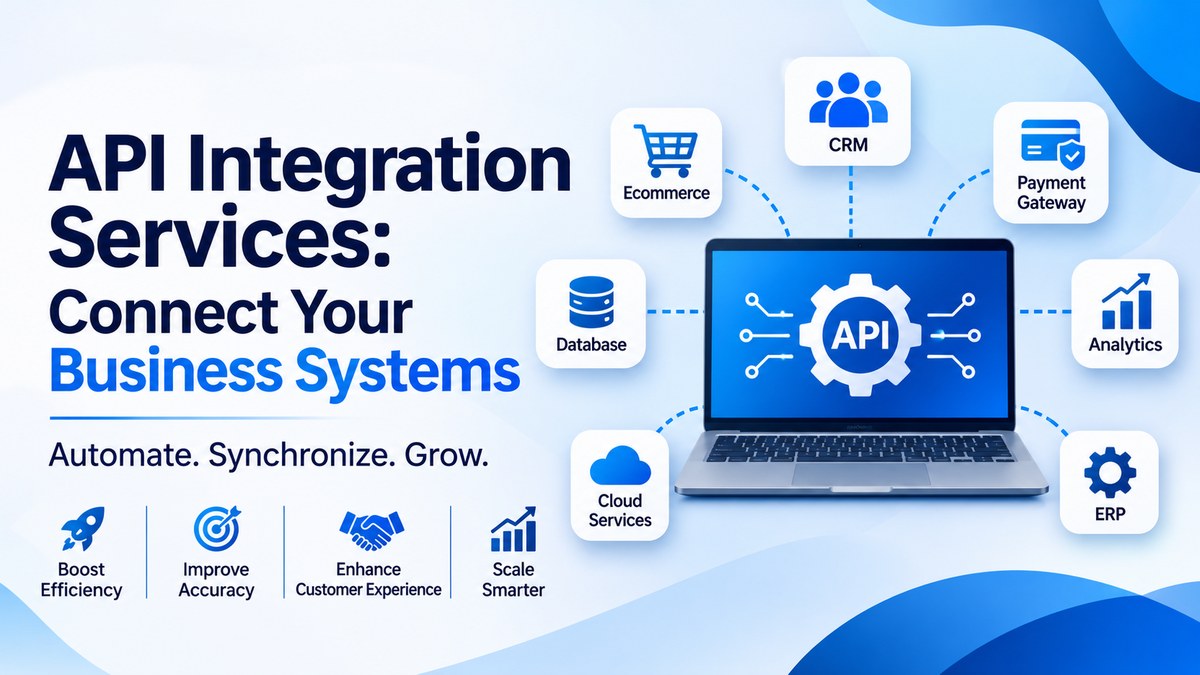
You are integrating multiple systems. Your software needs to connect with payment providers, CRMs, external APIs, or other business tools.
For a small, isolated task, a freelance developer may be sufficient. For a product that needs consistent development over several months, a dedicated engagement may provide better continuity.
Choosing a developer based only on cost can lead to technical problems, communication difficulties, or delays. Evaluate both technical ability and the developer’s approach to project delivery.
Look for experience with Laravel applications that have requirements similar to yours.
Ask about previous work involving APIs, database design, authentication, integrations, performance optimization, and testing where relevant.
Laravel development requires a strong understanding of PHP, SQL, database relationships, application architecture, and debugging.
The developer should be able to explain technical decisions and their impact on maintainability and performance.
Ask how the developer approaches input validation, authorization, secure authentication, dependency updates, and protection of sensitive data.
Security should be considered throughout development rather than added only before launch.
The developer should be able to explain progress, discuss blockers, ask clarifying questions, and document important technical decisions.
Agree on communication channels, meeting schedules, progress reports, and expected response times before work begins.
Ask whether the developer follows practices such as version control, code reviews, automated testing, staging deployments, and documented release procedures.
These practices can help improve code quality and reduce deployment risks.
Your agreement should explain ownership of source code, intellectual property, repositories, credentials, documentation, and deliverables.
Also clarify access to infrastructure and third-party services so the business can maintain control of its application.
Finding the right development partner involves more than selecting a programming language or hiring someone who knows a particular framework. Businesses need a team that understands their goals, communicates clearly, and can align technical decisions with real operational requirements.
TechieDom can be considered by businesses exploring custom software and web application development support.
When discussing a potential project, focus on your business objectives, required features, existing systems, expected timeline, and long-term maintenance needs. A clear discussion of these factors helps establish whether the proposed development approach fits your requirements.
If you are planning a Laravel-based application, explore TechieDom’s relevant software development services to learn more about available development options.
A business may hire a dedicated Laravel developer to access specialized framework expertise, maintain development continuity, build custom applications, integrate external systems, and support ongoing improvements.
Laravel can support many production applications, including complex business platforms. However, the suitability of the framework depends on the application’s architecture, workload, infrastructure, security requirements, and implementation quality.
Yes. They can help maintain existing Laravel applications, fix bugs, add features, improve performance, update dependencies, and integrate new services. A technical assessment may be needed before estimating the work.
It depends on the project. A dedicated engagement may be more suitable for ongoing work requiring continuity, while a freelancer may be sufficient for a small, well-defined task. Compare expertise, availability, management needs, and total cost.
A relatively simple application may take several weeks or a few months, while a complex SaaS or enterprise platform may require many months of development. Timelines depend on requirements, integrations, testing, and team capacity.
Yes. Laravel can be used to develop SaaS functionality such as user accounts, APIs, subscription workflows, dashboards, and administrative tools. Requirements such as multi-tenancy and usage-based billing need careful design.
Prepare a project overview, target user information, a prioritized feature list, integration requirements, technical constraints, estimated budget, and desired timeline. These details help a development partner assess the project and provide a more meaningful estimate.
Businesses hire dedicated Laravel developers to access specialized skills, maintain development continuity, and build web applications around their specific requirements.
From SaaS products and custom business tools to customer portals and API-driven platforms, Laravel can provide a practical foundation for many web development projects.
The right hiring decision depends on your project’s scope, budget, timeline, and need for ongoing support. Evaluate technical experience, communication, security practices, and delivery processes before choosing a developer or development partner.
If your business is planning a new web application or improving an existing product, TechieDom can help you explore software development options aligned with your requirements and long-term goals.